
Chimney Repair in Tampa, FL
Thunderstorms, hurricane season winds and months of humidity wear on a chimney in Tampa. We trace where the water gets in, tell you what we found, and repair the crown, cap, flashing or masonry that gave way.
- Crowns, caps and flashing
- Masonry and mortar joints
- Storm damage repair
Signs your chimney needs repair
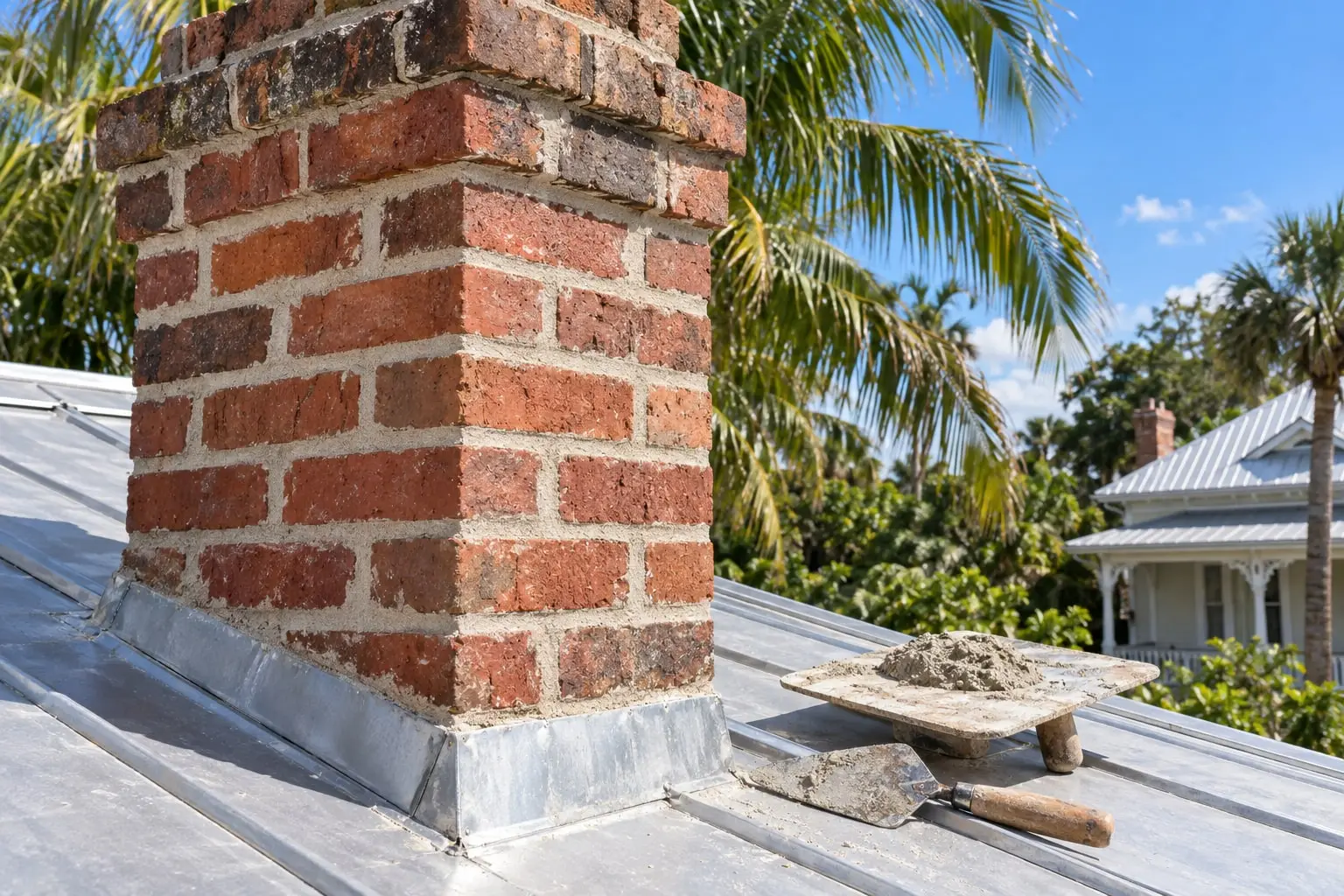
Chimneys rarely fail overnight. Along the Gulf coast they wear from the top down: sun and downpours crack the crown, water seeps into the brick or around the flue, and a long humid summer keeps it all damp. A ceiling stain usually means the water has been getting in for a while.
Call us if you notice any of the signs below. Most cost less to fix early than late, and none of them improves by waiting for the next storm.
- Water stains on the ceiling or on the wall beside the chimney, especially after a heavy afternoon storm
- Cracks in the concrete crown, or pieces of it lying on the roof
- Mortar that is crumbling or missing between the bricks
- Brick faces that flake, pop or break away (spalling)
- White, chalky deposits on the brick (efflorescence), which show that water is moving through it
- A chimney cap that is rusted, bent or missing
- Flashing that is lifting, cracked or covered over with old caulk
- A chimney that leans, or a gap where it meets the house
What Chimney Repair gives you
We find the real leak
A stain indoors can begin at the crown, the cap, the flashing or the brick itself. We check each one before recommending work, so you pay to fix the cause rather than the symptom.
Built for wet weather
A crown needs an overhang and drip edge that throw water clear of the brick, and flashing has to be set and sealed against the wind driven rain that thunderstorms and tropical systems push across Tampa Bay.
Brick or prefab
Older brick chimneys, like those in Ybor City and South Tampa, and newer factory-built chimneys with metal flues in framed chases wear in different places. We find out which kind you have before we suggest a repair.
Plain explanations
Before work starts we tell you what we found, where the water is entering and what can wait, so the day of the repair holds no surprises.
What a chimney repair may involve
Each repair starts with a full look at the stack, the roof around it and the inside of the flue, and the work is then matched to what failed. These are the repairs that homes in Tampa and the surrounding areas need most.
- Crown repair or rebuild, finished with a proper overhang and drip edge
- New stainless steel caps and spark arrestors, sized to fit the flue
- Flashing repair or replacement at the joint between chimney and roof
- Chase cover repair for a metal flue in a framed chase
- Tuckpointing: cutting out failed mortar joints and repointing them
- Replacing spalled or broken bricks with ones that match the existing masonry
- A water repellent treatment for brick that can still breathe
- Damper repair, or a top sealing damper for a fireplace that sits unused
Why chimneys wear faster on the Tampa Bay coast
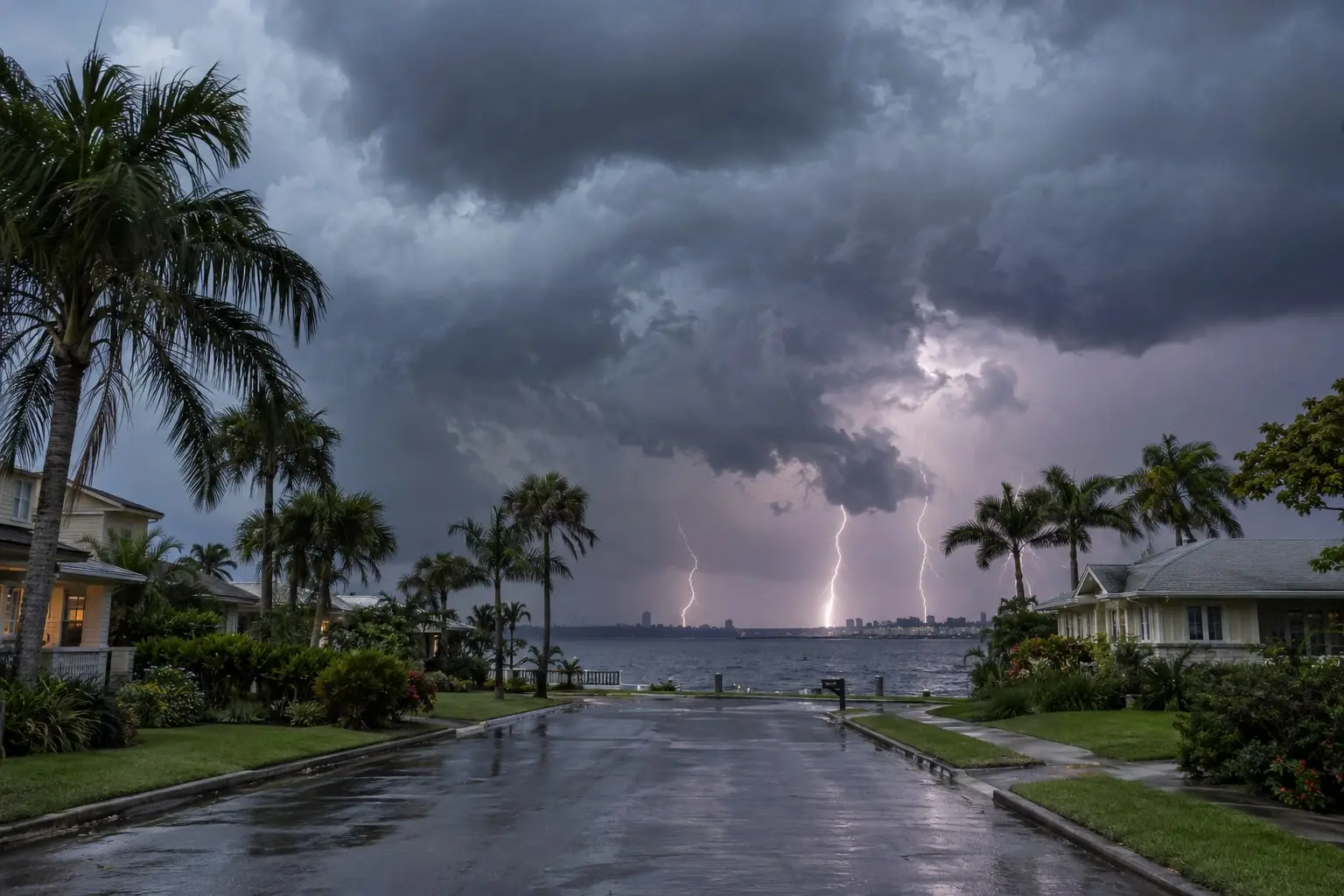
Tampa gets frequent summer thunderstorms with lightning, a rainy season that runs from about June to September and a hurricane season that officially runs from June 1 to November 30, and the wind pushes that rain sideways into joints and under flashing. Near the bay, salt in the air also eats at metal caps and flashing. Add months of high humidity, plus oak leaves and palm debris that pile up around the cap and the crown, and a chimney that is rarely lit has very little chance to dry out.
Plenty of Tampa fireplaces are lit only on a few cool nights a year, so trouble goes unseen until a leak shows up indoors. In newer neighborhoods the chimney is often a metal flue inside a wood framed chase, where a failed chase cover lets water reach the framing, which is why every repair visit covers the whole system and not only the spot you called about.
Repair or replace?
Most chimneys call for a repair, not a rebuild. A cracked crown, failed flashing and a few rows of loose mortar can all be fixed while the rest of the masonry stays where it is. If part of the chimney is unstable, or the damage runs deep into the stack, we say so plainly and explain what the bigger job involves before you decide.
Chimney Repair questions
Why does my chimney only leak in hard rain?
A light rain runs off, but a heavy wind driven storm forces water into the weakest spot: usually a cracked crown, an open joint in the flashing or a cap that no longer covers the flue. We check each of those so the repair lands where the water really gets in.
Can a crown be repaired without rebuilding the chimney?
Usually, yes. Small cracks can be sealed with a flexible crown coating, while a broken or too flat crown can be taken off and recast on the existing chimney. The brick underneath stays as it is unless it is damaged as well.
Does my chimney need a new cap?
If the cap is rusted through, bent by a storm or missing, yes. A cap keeps rain, leaves and animals out of the flue, and in Tampa's sun, humidity and salt air we recommend stainless steel. The flue is measured so the new cap sits on it properly.
Should my roofer handle the chimney work?
Flashing sits where the roof and the chimney meet, so it is often left to neither trade. We look at the chimney, the flashing and the roofing around it together and judge the whole joint at once.
How can I tell if the mortar needs tuckpointing?
Drag a key along a joint. If the mortar crumbles out, if you can see gaps between bricks or if the joints sit deeper than the brick face, the mortar has worn out and should be repointed before water gets behind it.
Other services we provide
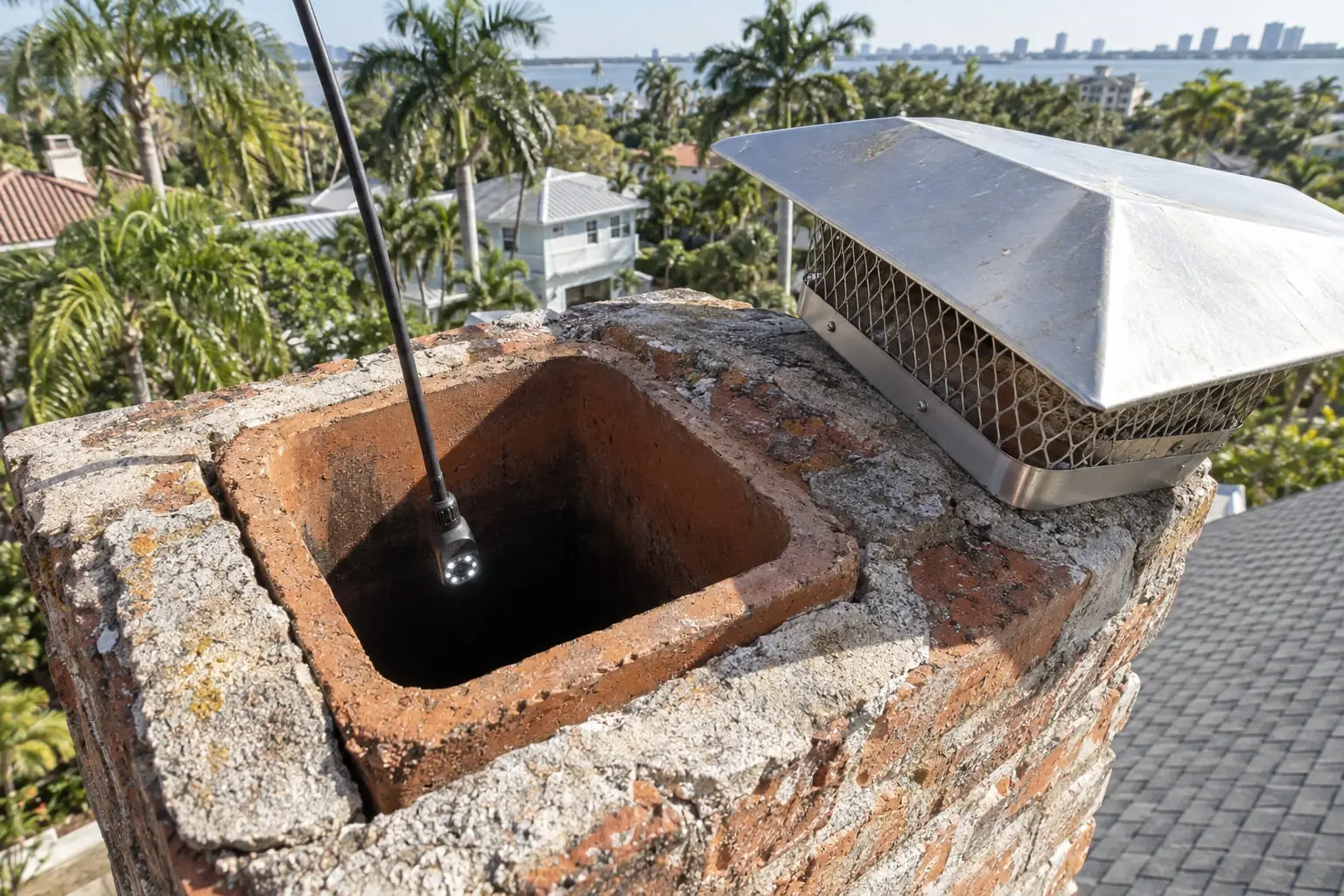
Chimney Inspection
Inspections that follow NFPA 211 and catch hazards before they turn into damage.
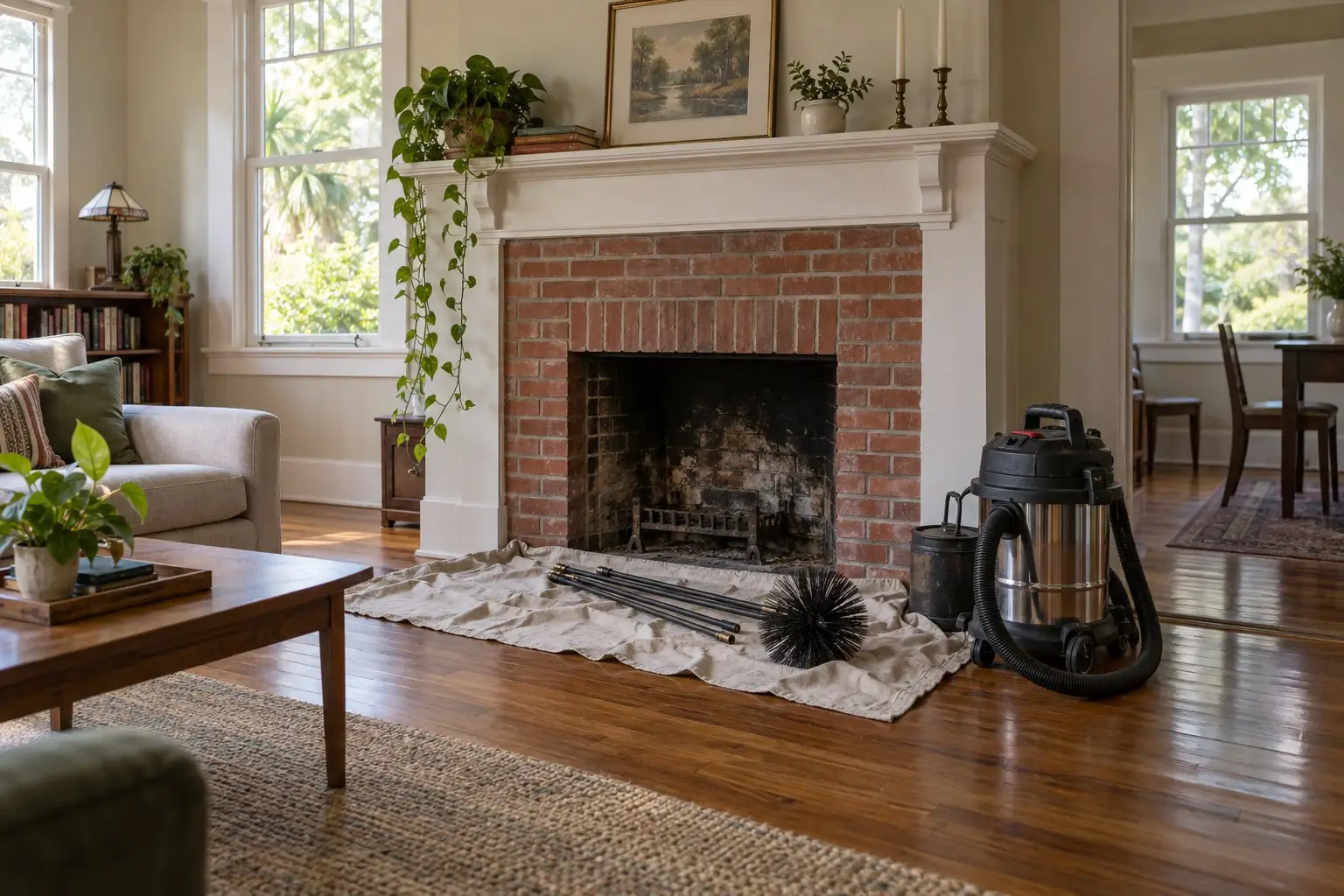
Chimney Sweep
We brush creosote, soot and nests out of the flue so the fireplace draws and burns safely.
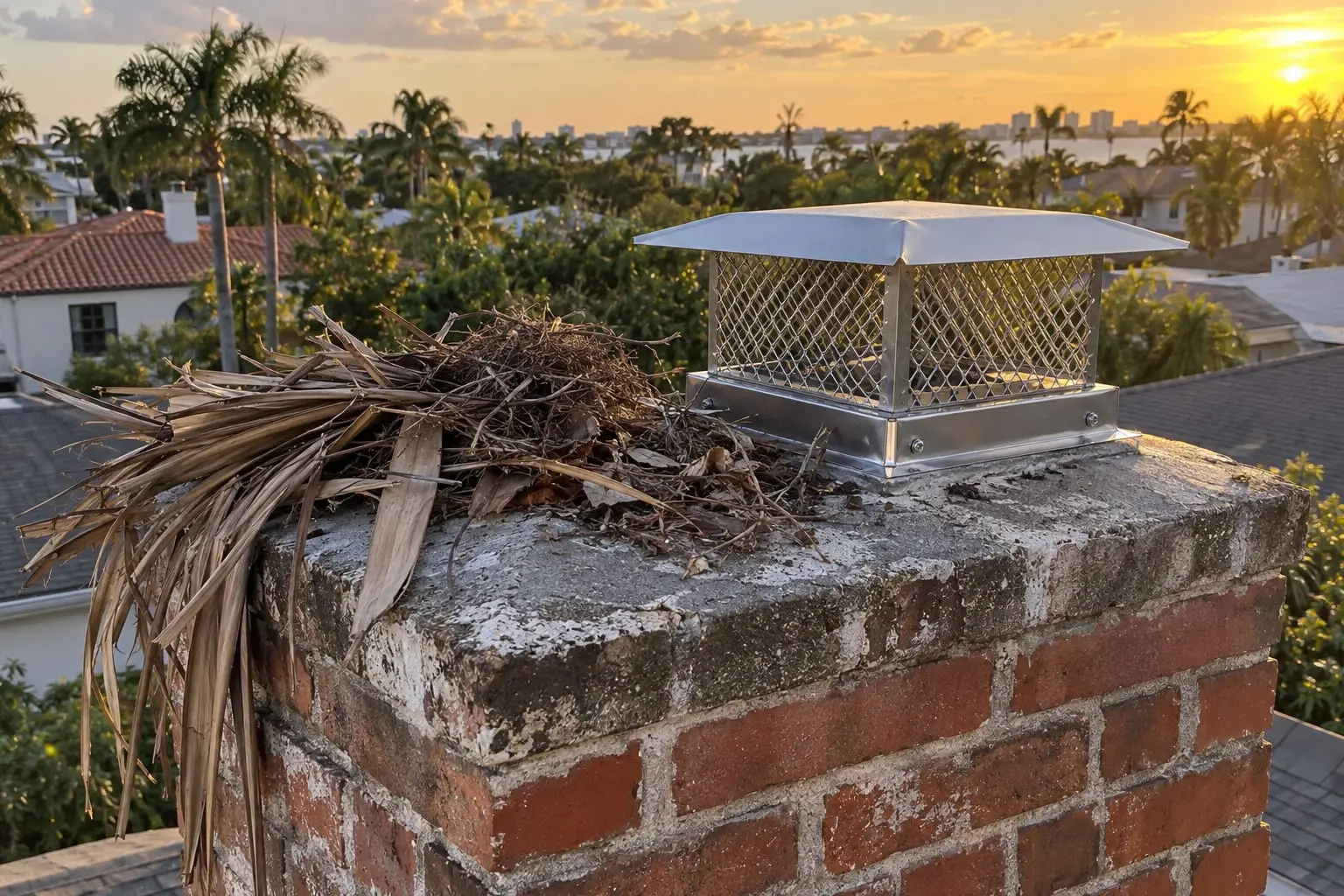
Chimney Cleaning
Flue, smoke chamber, stove and fireplace cleaning, plus dryer vent cleaning, for heavy buildup, odors and systems left unused.
Ready to find and stop that leak?
Call us or send the form, and we will find a visit time that suits you on any day of the week.